Why a title suit was rightly decided like a title suit and nothing more.
Muslims, Hindus and Countrymen! Lend me your ears, I come to analyse the judgment, not to praise it. Our liberal media has told you that the judgment favours the majority, and they are all honourable organizations.
Born with the privilege to be liberal, my heart pains to see the legitimization of majoritarianism by the highest platform for justice in India. It is my democratic right to question the independence of the judiciary, but this right is to be exercised judiciously. I reek of neglect.
The liberal media, I follow almost exclusively, tells us the judgment was hasty is granting the title over the disputed 2.77 acres of the erstwhile Babri Masjid to the Hindus. That ‘preponderance of probabilities’ is too low a threshold for a case of this magnitude, which in any case was not met. That granting five acres of land to the Muslims is not justice. That the Court may be faulted at its finding that there was no evidence of Muslim worship at the Babri Masjid, prior to 1856, even though a masjid, in itself, is proof that Muslims worshipped there.
But this is a title dispute, is it not? To be decided on the basis of evidence presented by contesting parties. When Rajeev Dhawan (like his predecessors in the Allahabad HC) admitted, on behalf of the Sunni Central Waqf Board, that there is no evidence of Muslim’s offering namaz at the Babri Masjid prior to 1856, should the Court have ignored this? How can one bring evidence of offering namaz almost two hundred years ago?
When the complaint made by the moezzin (care-taker) of the Babri mosque, in 1860, categorically admitted that Hindus worshipped in the inner and outer Courtyards of the mosque over the last century, should the Court have been more reserved, considering the magnanimity of the dispute, in finding this to be a contemporaneous account of actualities?
The media tells you that it was a convenient way out. We could all see which way the wind was blowing. Who would resist? The Supreme Court ought to have accepted the written affidavits of 14 Muslims that swore that the Babri Masjid was built on a Ram temple. Maybe the Court’s analysis of the Archaeological Survey of India’s (ASI) 2003 report was unnecessary. But the law of evidence, crucial to meting out justice, necessitated a higher standard of proof. The Court’s hands were tied, weren’t they?
The Sunni Waqf Board laid claim to the entire mosque territory, the inner and the outer Courtyard. Despite this claim, the Muslim party admitted that after the British built the grill-brick wall separating the former from the latter in 1856, Muslim prayers were limited only to possession of the inner Courtyard and that the Hindus had unrestricted and unimpeded access to the outer Courtyard.
Considering convenience and majoritarianism was the name of the game, the Court could have simply dismissed the Waqf Board’s suit on this admission. It ought not to have gone onto analyse Muslim admissions that encryptions of Ramjanmasthan and stone and wall carvings to this effect were abundant in the inner Courtyard, establishing a higher likeliness of Hindu worship in the inner Courtyard as well.
When the Sunni Waqf Board’s case, that the Babri Masjid was built on vacant land, fell flat in the face of the ASI report’s finding of an underlying non-Islamic structure, the Court could have dismissed the plea entirely. But it ruled that title cannot be adjudicated based on archaeological findings alone. Did this indicate the so-called convenience-based approach the Court is accused of?
“The evil that men do lives after them; the good is oft interred with their bones.” So let it be with Justice Gogoi, who retired on November 17.
The Sunni title suit was dismissed and the Hindu suit was allowed based on a preponderance of probabilities. The failure of the Muslim party, admittedly, to prove their title/possessory rights in evidence, was enough to dismiss the suit without relief.
But the liberal media has told us that the Muslims were patronized by granting them five acres of land, and the liberal media serve an honourable cause.
Yet, the Court expanded its legal responsibility and performed its constitutional duty in attempting to do complete justice in granting land, in a prominent place in Ayodhya, to the Waqf Board to build a mosque.
“I speak not to disprove what Brutus spoke, But here I am to speak what I do know.”
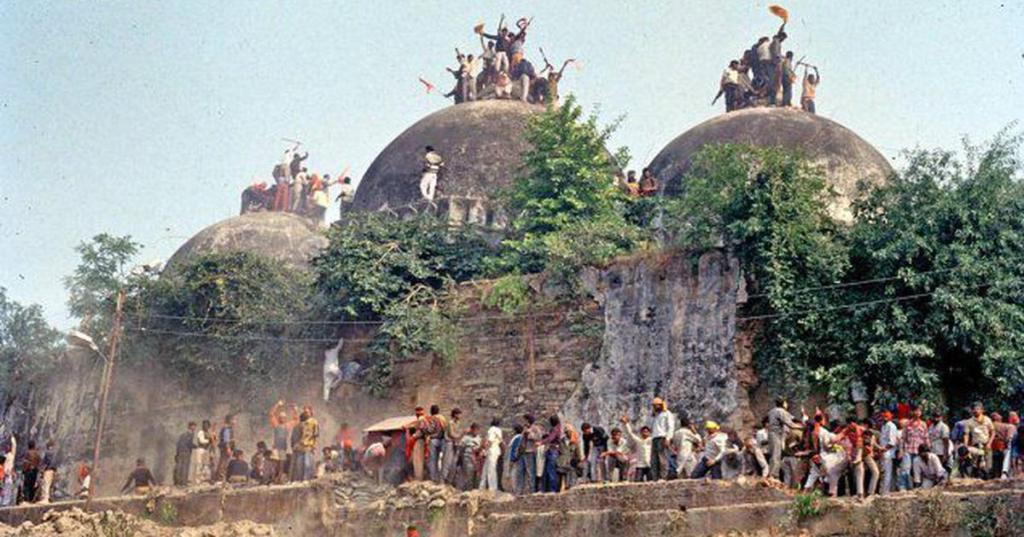
The Court found the desecration and subsequent demolition of the Babri Masjid in violation of the rule of law, yet, as the honourable liberal media has pointed out, no punishment or legal consequence fell from the Court against those responsible.
The criminal trial for those responsible for the 1992 demolition is in its concluding stages in a special CBI court in Lucknow. Would the Court subscribe to the rule of law if it were to mete out punishments without actual determination of criminal liability? We must resist emotional digression and remind ourselves that this is a title dispute.
The liberal media tells us that, considering the Muslims had some stake in the Babri Masjid even without a title, the Allahabad High Court’s decision to equally divide the premises between all three competing parties ought to have been the appropriate relief. But was the division of Jerusalem a long lasting solution for peace? Did North Korea not invade the South despite an agreement to divide the peninsula? And did the division of Kashmir bring prosperity to the valley?
“O judgment! thou art fled to brutish beasts, And men have lost their reason.”
Maybe the decision to award the disputed premises to the Hindus (based on a higher claim of title) and grant of land to the Muslims is more difficult for us liberals to accept. But like we always like to tell our radical brothers and sisters, this is about something much bigger than ourselves.
Whether peace is determined by majoritarianism is a question that is up for debate, but the Supreme Court decided the title dispute like a title dispute, not a religious one.
Yet, the liberal media tells you that the Supreme Court practiced favouritism which has far-reaching consequences for minorities, and the liberal media is essential to our democracy.
 Reader's Lawnge